Botanical name : Allium fistulosum
Common name : Japanese bunching onion, Welsh onion, Spring onion, Scallion
Intermediate difficulty for seed saving
Lifecycle: Perennial
Pollination: Insect pollinated
Mating system: Perfect flowers
Suggested spacing: Same as for eating. May be grown in bunches.
Seed specific requirements: Moderate vernalisation required
Isolation distance: recommendation: 250 m
Population size: 10 to 20 plants
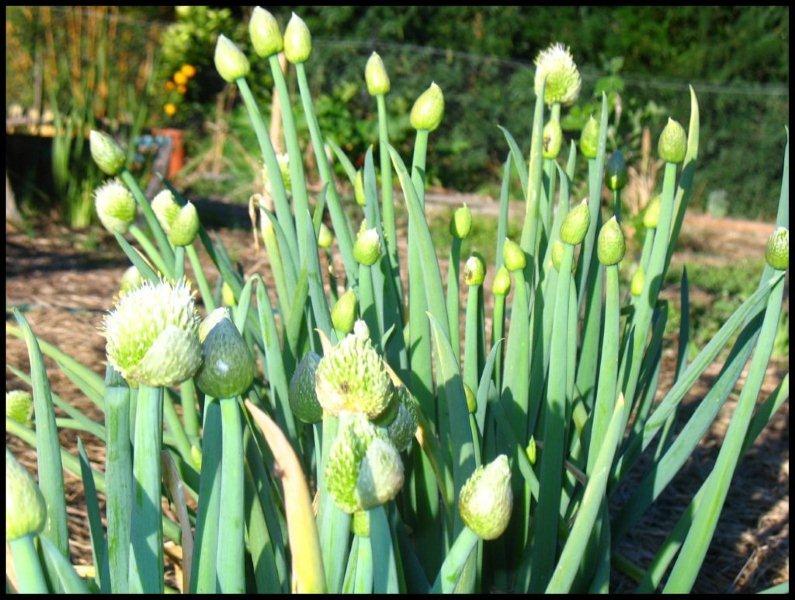
Seed maturity: Brown papery capsules in the mature flower head start to open showing the black seeds inside
Processing method: Dry threshing and winnowing
Expected seed viability: 2 years
Growing for seed
Bunching onions are known by a confusing array of common names and some names are also used for onions of other types – shallots, scallions, Welsh onions, spring onions etc. Ensuring that what is being grown for seed is the only Allium fistulosum variety within a 250m radius will help avoid inadvertent crosses.
Bunching onions (A. fistulosum) can cross with bulbing onions (A. cepa). This is done with embryo rescue techniques by commercial breeders. Home growers may choose to ignore the risk of crossing between species unless they are saving seeds from rare varieties, in which case isolation distances of more than 250 metres are required from both A. cepa and other A. fistulosum varieties.
Note that bunching onions can also be propagated vegetatively by dividing clumps each season.
Some vernalisation is required to initiate flowering. Temperatures under about 12 C are likely sufficient, but requirements for varieties may differ. Generally, plants that are left in the garden over winter will form flowers in Spring.
Selection
Seed plants are selected on vigour as well as lower stem colour. The lower part of the leaves may be coloured red, white or purple depending on the variety.
Harvest
Flower heads can be harvested as the capsules that make up the flower head turn brown and papery. The ones at the centre of the top will mature first. As soon as they open and the black seeds are visible the whole head should be cut and bagged to finish drying.
Be vigilant to avoid rain wetting matured seed heads and causing mould problems with the seed.
Flower heads can be put into large harvest bags or spread out on tarps for drying.
Processing
Dried flower heads are easily threshed by rubbing them between gloved hands. Sieves can be used to remove the seeds from the stalk and pod fragments. Winnowing will remove smaller frass and leave the black angular seeds.
Contributors
Liz Worth