Botanical name : Cicer arietinum
Common name : Chickpea, Garbanzo, Gram, Chana Dal, Varieties Desi & Kabuli
Easy for seed saving
Lifecycle: Annual
Pollination: Self pollinated
Mating system: Perfect self-fertile flowers
Suggested spacing: Same as for eating production
Seed specific requirements: None
Isolation distance: 3m
Population size: 5 to 10 plants, viable seed can be saved from a single plant
Seed maturity: Pods change colour from green to brown when seed is mature
Processing method: Dry threshing and winnowing
Expected seed viability: 4 years
Growing for seed
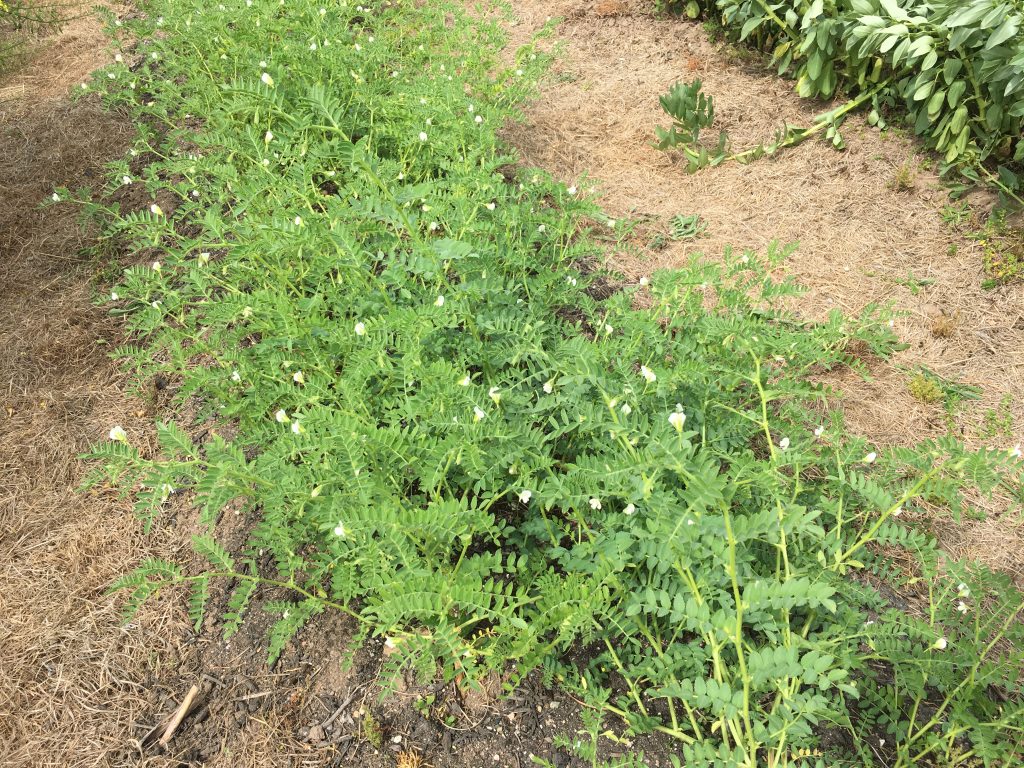
Growing for seed is obviously the same as growing chickpeas to eat. They can be either autumn or spring sown with the ideal sowing time depending on the local conditions. Sowing time should be chosen to ensure that flowering occurs during moderate temperatures, as seed set can be inhibited by temperatures below 15 C or above 32 C.
Selection
There are many chickpea varieties, although most are not commonly known to Australian gardeners. Traits to be considered when selecting which plants to save seed from can include: flower colour, seed colour and size and the number of seeds per pod.
Diseases & Pests
Chickpeas are commonly attacked by Native Budworm (Helicoverpa punctigera). It was previously known as Heliothis moth (Heliothis punctigera). It is the caterpillar stage of the lifecycle that does the most damage to chickpeas as they feed on the developing seed. The caterpillars grow up to about 40mm long and can vary in colour from green to dark brown. They have stripes along the body when mature.
Control is either by hand removal or by applying Bacillus thuringiensis (Bt). Hand removal is only effective for small crops. Eggs can be removed when identified, usually at the top of the plant in the leaf buds. Caterpillars can be picked off when seen. Be aware that the caterpillars start very small, 1 to 2mm, and can enter pods when they are forming in the first week after pollination. Spraying with the organic control Bt is effective.
Pyrethrum products are also effective but risk also harming a range of beneficial insects including parasitic wasps that attack both the eggs and the larvae of the Native Budworm.
Harvest
Pods are ready to harvest as soon as they turn brown. They can either be picked individually or the whole plant is cut when 90% or more of the pods have reached maturity. Chickpeas are not prone to shattering in the garden, so it is safe to wait for all the pods to mature before harvesting.
Processing
Processing is easier when the crop is properly dry. Seeds should be very hard before threshing is attempted.
The seed can be released from the pods by hand or plant material can be threshed to separate the seeds from the pods. Walking on the plant material is a common method to break the pods open. Sieving and threshing are then used to separate the seed from the chaff.
Contributors
Liz Worth