
Botanical name : Sinapis alba
Synonyms : Brassica hirta, Brassica alba
Common name : White mustard, Yellow Mustard
Intermediate difficulty for seed saving
Lifecycle: Annual
Pollination: Insect pollinated
Mating system: Perfect self-incompatible flowers
Suggested spacing: 20cm
Seed specific requirements: Long daylength required for flowering initiation
Isolation distance: 250 metres or more
Population size: 5 to 20 plants
Seed maturity: Pods turn brown when seed is mature
Processing method: Dry threshing, sieving and winnowing
Expected seed viability: 4 to 6 years
Images
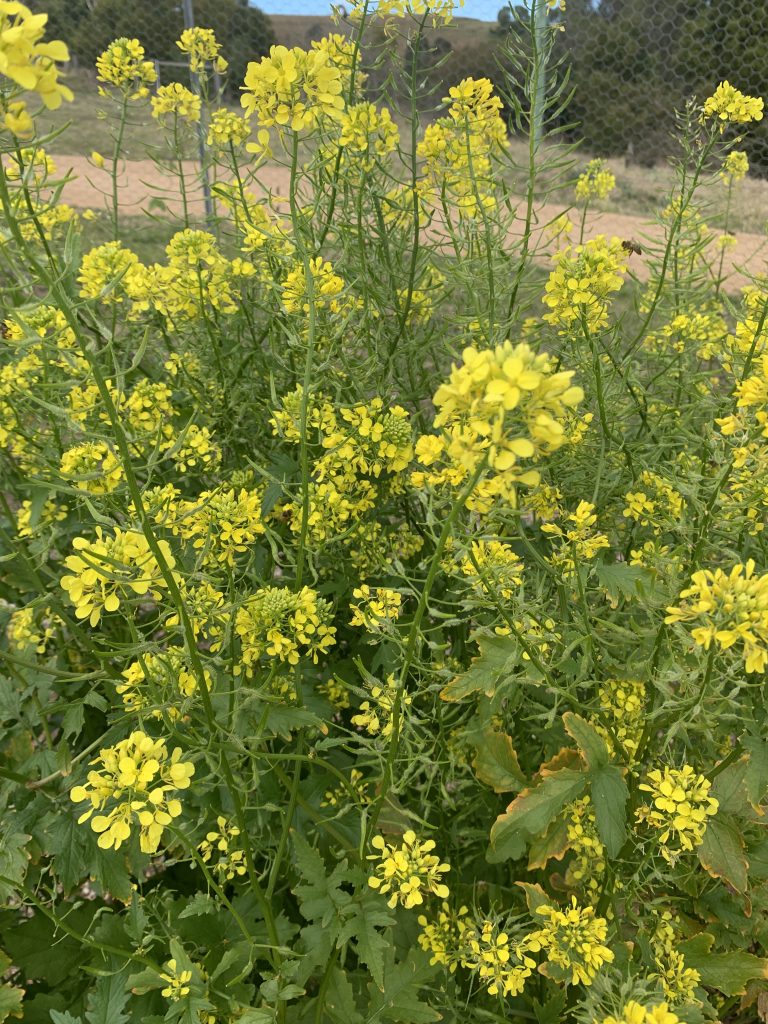
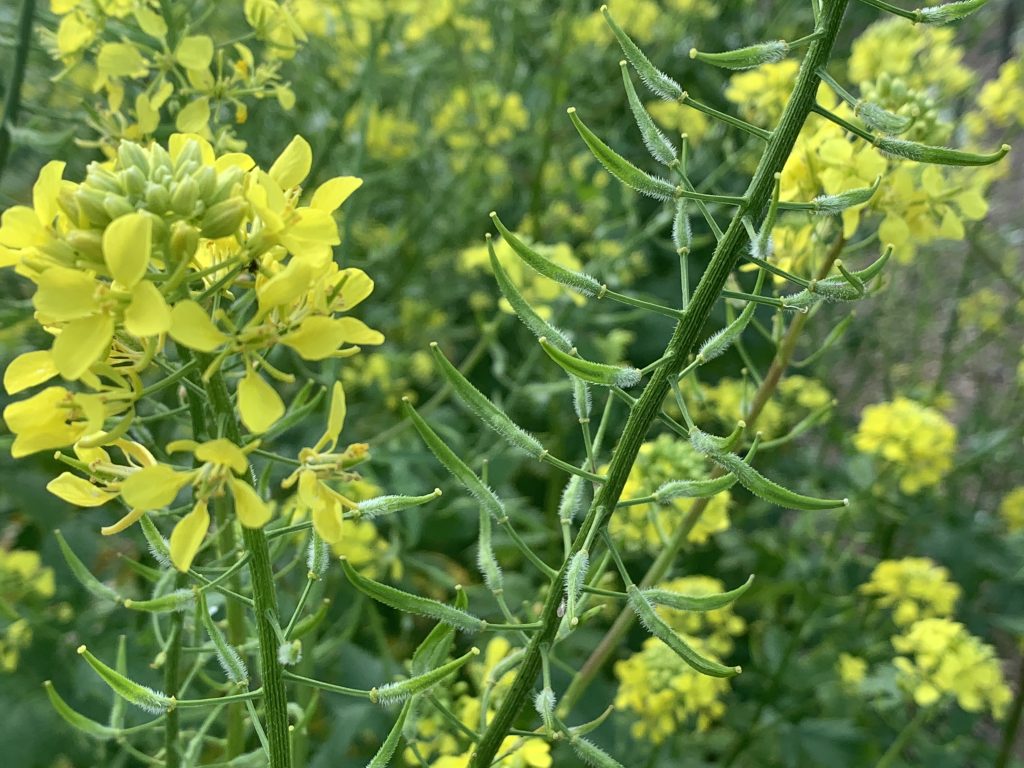
Growing for seed
Sinapis alba varieties do not cross with other mustards such as mustard greens or black mustard. If a named variety is being grown it will need to be isolated from other S. alba varieties to avoid cross-pollination. Isolation distances of at least 250 metres are required in this case. However, named cultivars are not commonly available for home growers in Australia so generally isolation is not required.
Flowering is initiated when the daylength reaches the number of hours required by that strain. As white mustard is cold hardy it can be treated as a biennial and grown over winter to ensure the plants reach a good size before flowering is triggered.
Selection
Plants being grown for seed should be selected on health and vigour.
Harvest
Pods mature at the bottom of flower stalks first. The first set pods will be at risk of splitting and seed falling in the garden while possibly still flowering at the top of the stalk. The biggest and best seed will come from the first set pods. Cut flower stalks as soon as the bottom most pods are brown and crisp. If there is any sign of those pods starting to shatter in the field the stalks should be collected promptly.
Stalks can be put into large harvest bags or spread out on tarps for drying.
Processing
Dried stalk and pods are easily threshed by walking on them. Sieves can be used to remove the seeds from the bulky stalk and pod fragments. Winnowing will remove smaller frass and leave the seeds.
Storage
After processing, seed should be left in a paper bag for a few weeks. Even these small seeds can hold a surprising amount of moisture.
There is a fair likelihood that insect pests will have laid their eggs in or on the seed. To stop them in their tracks one of the easiest methods of control is to freeze the seed for a few days. To do this the seed must be absolutely dry first. It then must be placed in a sealed airtight container – like a glass jar – and left in a freezer for 48 to 72 hours to kill pests and their eggs.
Seed is best stored in an airtight container where it is dark, cool and dry.
Uses
White mustard seed is used in making condiment mustard, either whole or ground. The ground seed is used with other spices to make the yellow table mustard.
It is also grown as a green manure or cover crop. It has been used to reduce nematodes when grown prior to susceptible crops.
Contributors
Liz Worth