Botanical name : Lagenaria siceraria
Common name : Bottle Gourd, Calabash, New Guinea Bean, Birdhouse Gourd, Giant Gourd, Hard Shelled Gourd
_box title=”Summary Information” radius=”10″]
Intermediate difficulty for seed saving
Lifecycle: Annual
Pollination: Insect pollinated
Mating system: Monoecious with separate pollen producing and fruiting flowers
Suggested spacing: Same as for eating production
Seed specific requirements: None
Isolation distance: 250 m
Population size: 5 plants
Seed maturity: Fruit do not change colour when mature.
Processing method: Dry or wet process
Expected seed viability: 6 years
[/su_box]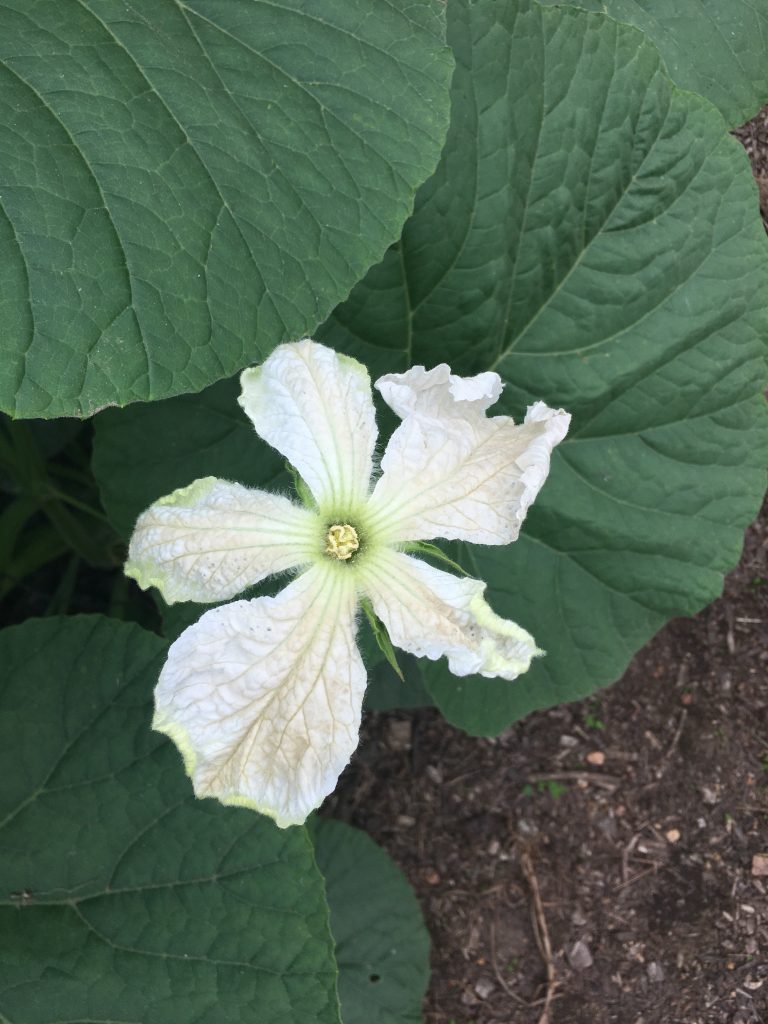
Growing for seed
These gourds are relatively straight-forward to grow. They can be large vining plants with large soft leaves. They do best if given a fence or trellis to grow up, but make sure the structure is sturdy enough to handle the weight of the fruits which can be quite large.
Selection
Look for robust vines with good production of fruit or the desired size and shape.
Harvest
Choosing when to harvest the fruit can be challenging as they do not give a consistent indication of maturity. Seed will be mature about one month after the fruit has come to its full size. Growers can check the tendril coming from the fruit attachment point to see if it is still green or has died back. Or simply wait until the vine dies back completely in colder weather.
Processing
Seed savers can use either dry processing or wet processing techniques to separate the seeds from the fruit.
Seed maturity benefits from some after-harvest ripening, so the fruit should be left in a protected location for 3 to 4 weeks after harvest.
The fruits can then be treated in the same way as pumpkins: cut open, seeds scraped out and washed off before spreading the seeds out to dry. Alternatively the fruit can be left in a sheltered location until they are fully dry, when they will have changed colour and the seeds will be rattling around inside. If the gourd is wanted for its use as a bowl or container, this second method of waiting for it to fully dry is required so that it keeps its structure. It may take several months for the gourd to fully dry this way. A hole can then be drilled or the shell broken to release the seeds.
Contributors
Liz Worth