Botanical name : Foeniculum vulgare
Common name : Fennel, Sweet Fennel, Florence Fennel, Bulbing Fennel
Intermediate difficulty for seed saving
Lifecycle: Perennial, grown as an annual
Pollination: Insect pollinated
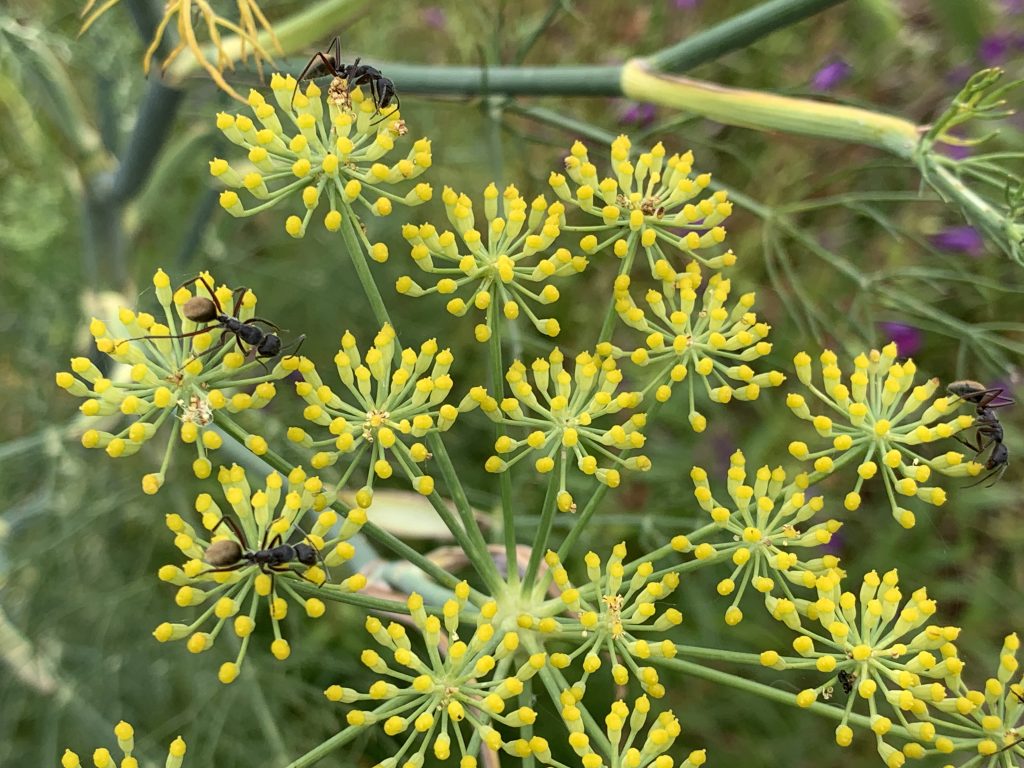
Mating system: Perfect self-fertile flowers. Although individual flowers on the plant will shed pollen before they are receptive the successive flowering means pollen from the same plant may pollinate a flower.
Suggested spacing: Same as for eating production.
Seed specific requirements: None
Isolation distance: 250 metres
Population size: 20 plants
Seed maturity: Seeds are mature when they change colour to brown
Processing method: Dry processing
Expected seed viability: 4 years
Growing for seed
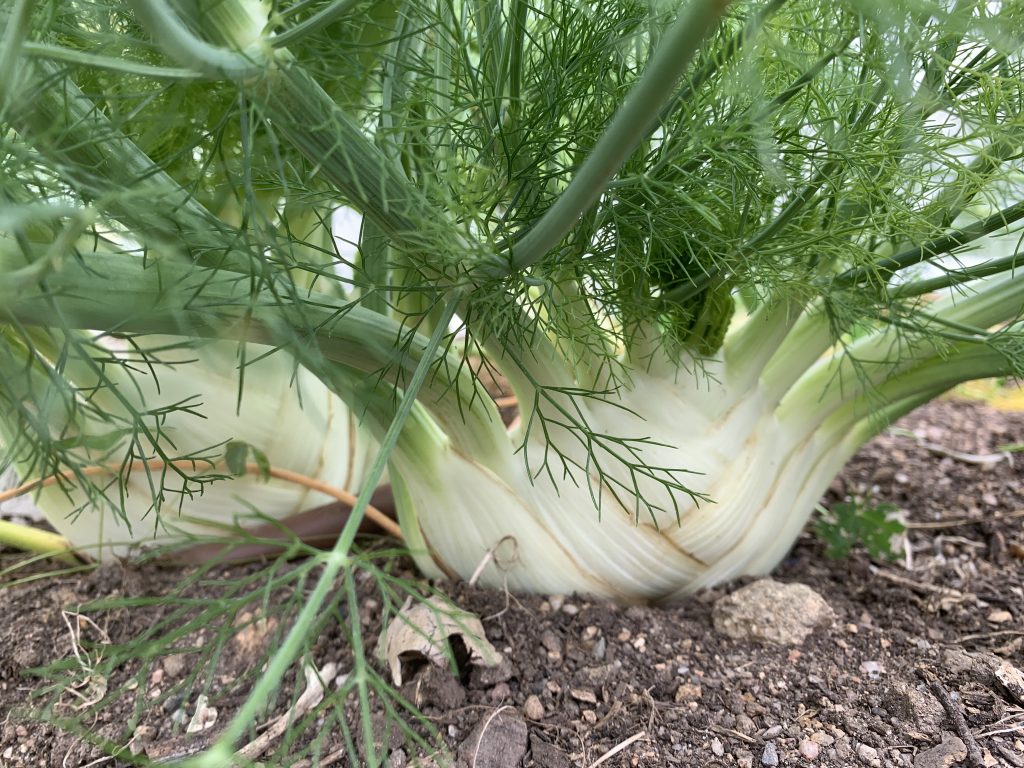
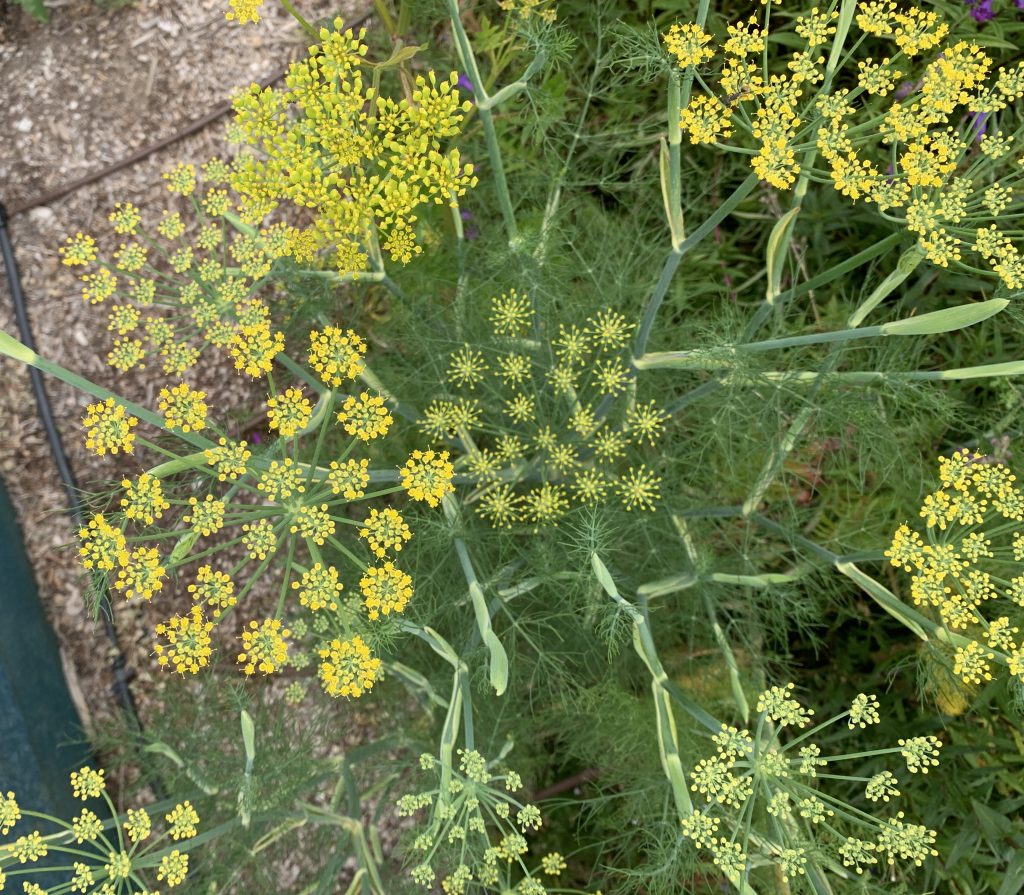
While plant spacing remains the same whether Fennel is being grown for eating or for seed production, it may be necessary to stake the flower stalks as they can get tall and top heavy.
As fennel is a common weed, particularly along roadsides in some areas, attention is required to ensure that a seed crop is isolated at least 250 m from wild flowering fennels. If there are significant weedy populations it may be wise to extend the isolation distance to 500 or more metres.
Selection
Selection of plants for seed will depend on whether Florence (bulbing) fennel is being grown for its bulbs or sweet fennel is being grown for the culinary use of its seeds and leaves. Florence fennel should be selected on good bulb size and form. Sweet fennel selected for prolific production of leaves and seeds.
Harvest
Fennel seeds are mature when they turn brown. The largest central flower will mature first and then the surrounding flowers will mature successively. The first matured seed will be the largest and most vigorous.
Harvesting is carried out by cutting heads after the seeds in the head have turned brown and before they can fall into the garden. Harvesting will continue until enough seed has been collected or the remaining seeds are considered too small.
Processing
Seed heads are dried for a week or two after harvest and before further processing. Rubbing the seed heads between gloved hands or against a mesh easily dislodges the seed. Winnowing is then used to separate the unwanted chaff from the viable seeds.
Contributors
Liz Worth