
Botanical name : Vigna umbellata
Synonym : Phaseolus calcaratus
Common name : Ricebean, Rice bean.
Easy for seed saving
Lifecycle: Annual
Pollination: Self-pollinated
Mating system: Perfect flowers
Suggested spacing: Same as for eating production
Seed specific requirements: none
Isolation distance: None required for home growers
Population size: 5 to 10 plants. A single plant will provide viable seed.
Seed maturity: Seeds are mature when the pods change colour to brown.
Processing method: Seeds fall very easily, sometimes even explosively, from dried pods.
Expected seed viability: 3 years
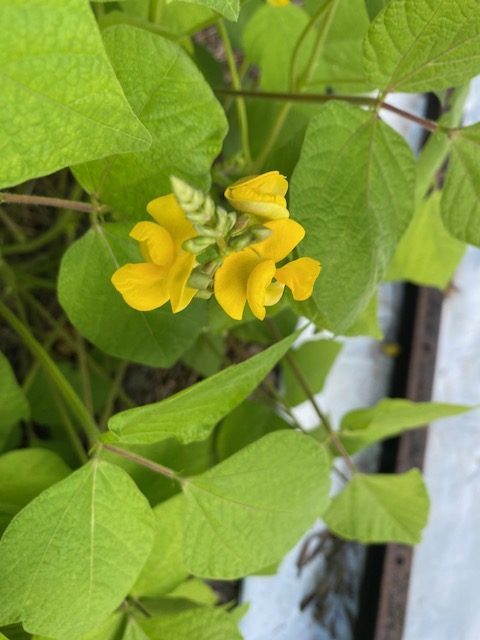
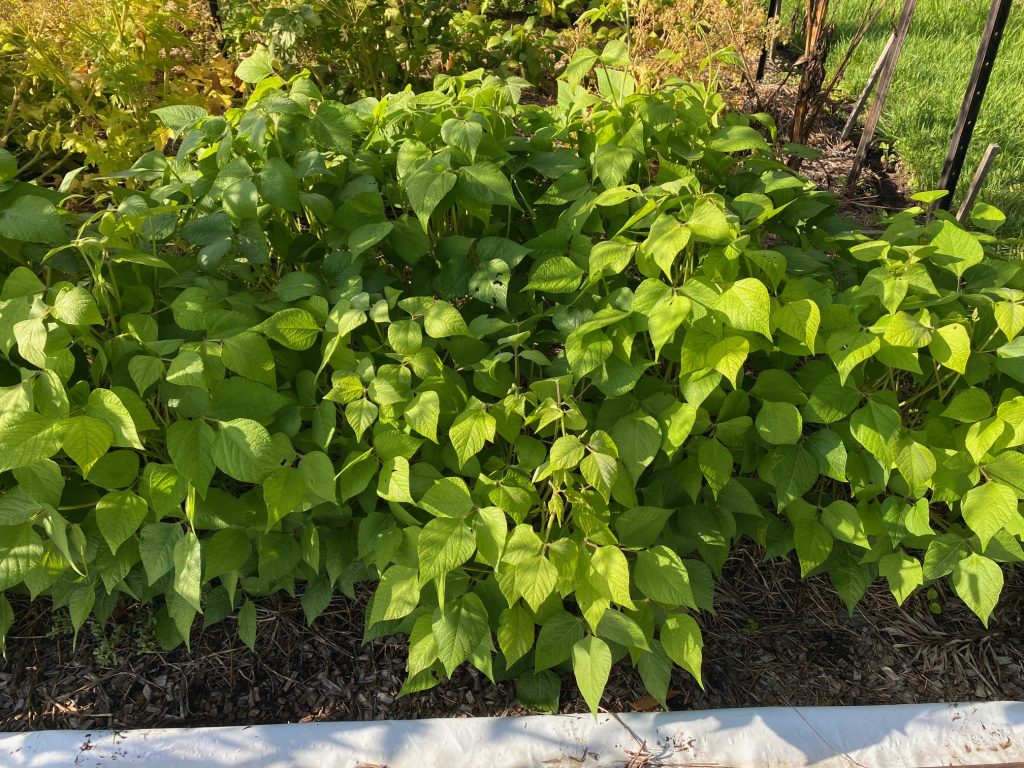
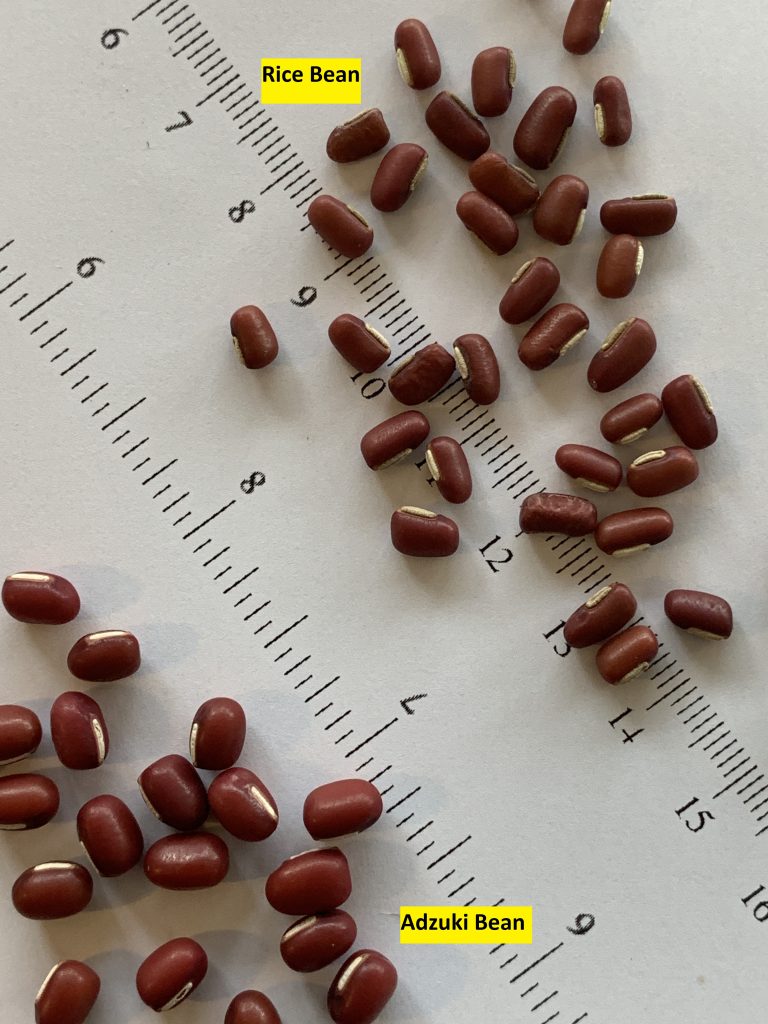
Rice bean seeds look very similar to Adzuki bean seeds. They are significantly smaller but have the same colour and a similar shape.
Cultivation
Rice beans are warm season annuals. They should all be planted when the soil is warm. The are not frost tolerant.
Growing for seed
Rice beans are very straight-forward to grow for seed. The pods are left on the plant until they change colour. As there are few, if any, named cultivars of rice beans available to home growers in Australia there is no requirement for any isolation of home-grown crops.
Selection
Any plants showing disease should not have seed collected from them. Growing multiple plants will allow selection based on vigour or other performance factors such as numbers of set pods.
Harvest
The easiest way to identify when to harvest is to leave the pods on the plants until they have dried to brown pods. If needed, pods can be harvested when they change colour.
Because of the relatively long production period for these types of beans it is usually better to hand harvest individual pods as they ripen rather than trying to cut and dry an entire plant, particularly as pods are prone to splitting when they are dry. Even handling dried pods during picking can cause them to explosively split.
Be vigilant and collect any dried pods before rain. Once beans have dried on the plant, significant rain very easily causes mould to grow on the pods and seeds and these should not then be saved for replanting.
Processing
Once the pods are dry they can be broken open to get the seeds out. As the pods usually split very easily when dry just shaking the pods will usually free the seeds. The seed can then be easily sieved to separate it from the remaining plant material.
Contributors
Liz Worth