
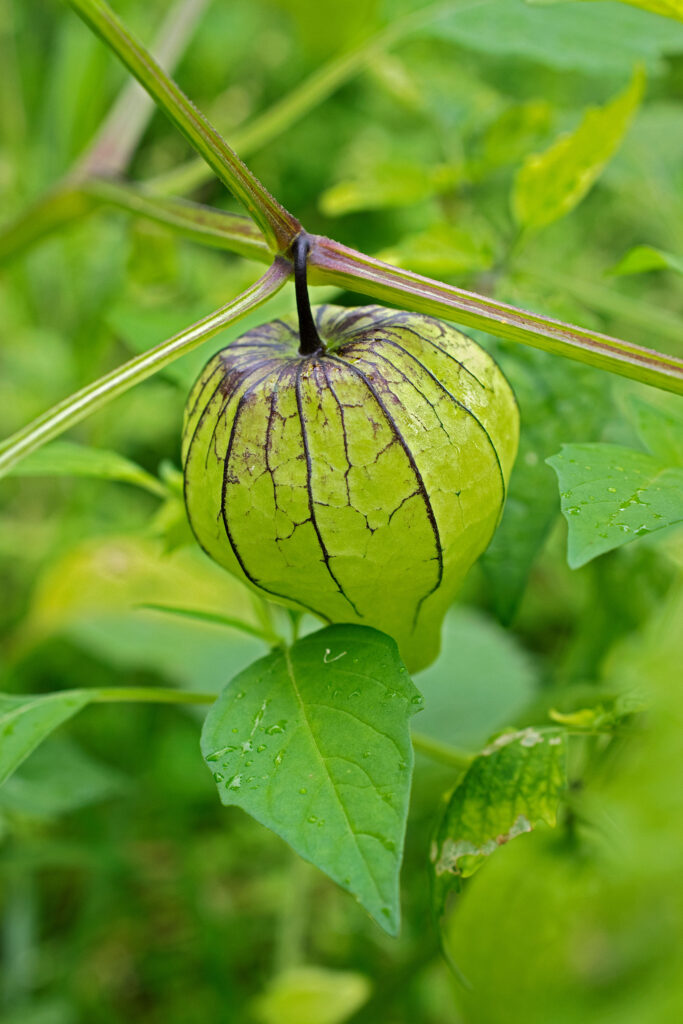
Botanical name : Physalis philadelphica
Synonyms : Physalis ixocarpa
Common name : Tomatillo, Mexican Husk Tomato
Intermediate difficulty for seed saving
Lifecycle: Annual
Pollination: Cross pollinated by insects
Mating system: Perfect self-incompatible flowers
Suggested spacing: Same as for eating production
Seed specific requirements: None
Isolation distance: 250 m
Population size: 20 plants
Seed maturity: Seed is mature when the fruit is ripe for eating
Processing method: Wet processing
Expected seed viability: 4 years
Growing for seed
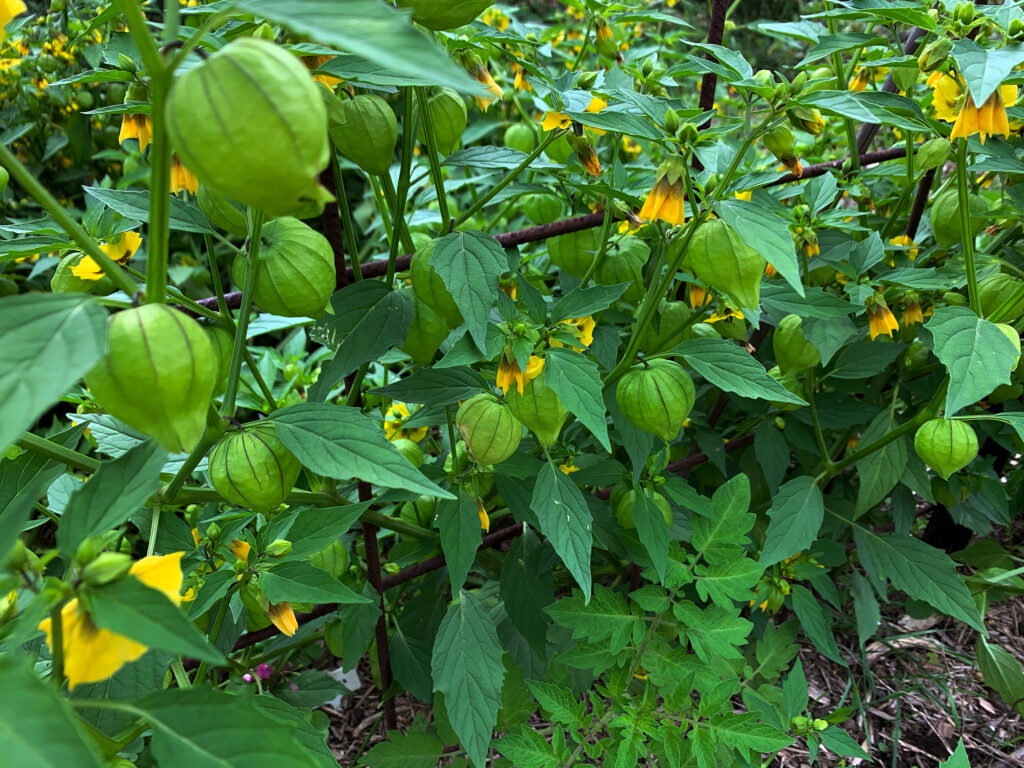
As the seed is mature at the same stage as the fruit is ready for eating tomatillos are grown no differently for seed saving. Plants can be large and sprawling and may require staking or some other support structure.
The main considerations when growing for seed are to grow a large enough population and isolate varieties at least 250 m from other flowering tomatillo varieties. Growing enough plants is crucial to ensure good pollination as the plants are not self-fertile and genetically different seed grown plants are required to provide pollen. As insects are relied on for pollination the isolation distances need to be far enough to stop pollen transfer between different varieties.
Selection
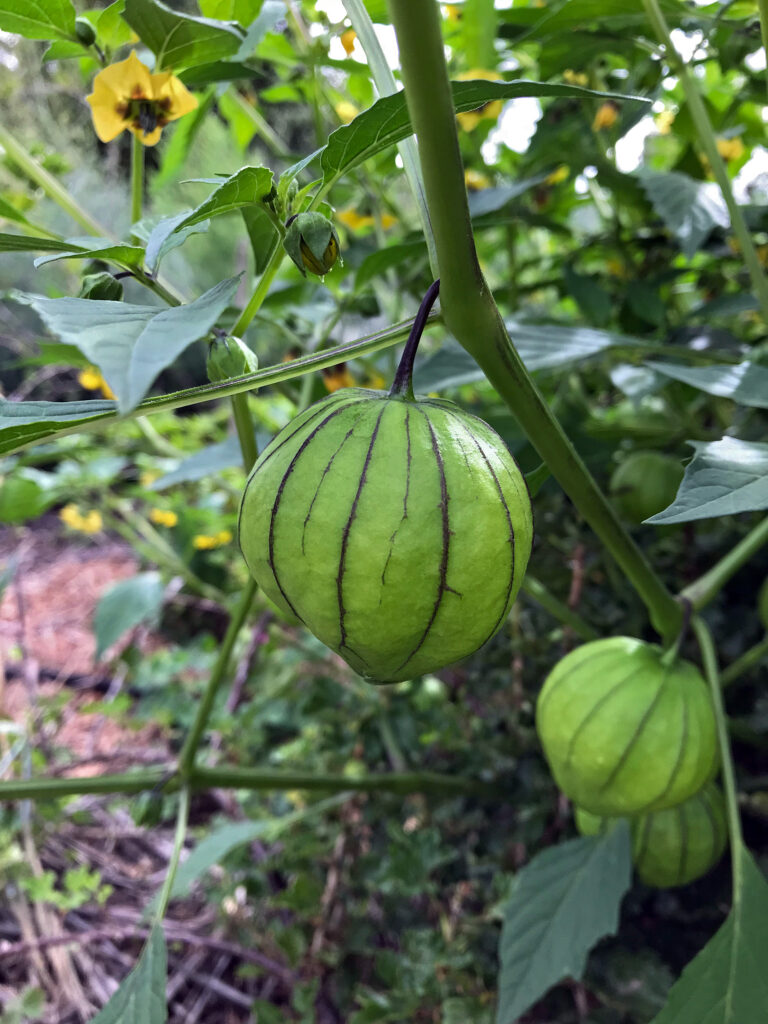
Tomatillo plants are selected for seed production based on the fruit colour and size. Good vigorous healthy plants should also be chosen. Any plants not showing the required traits should be removed from the population prior to flower pollination.
Harvest
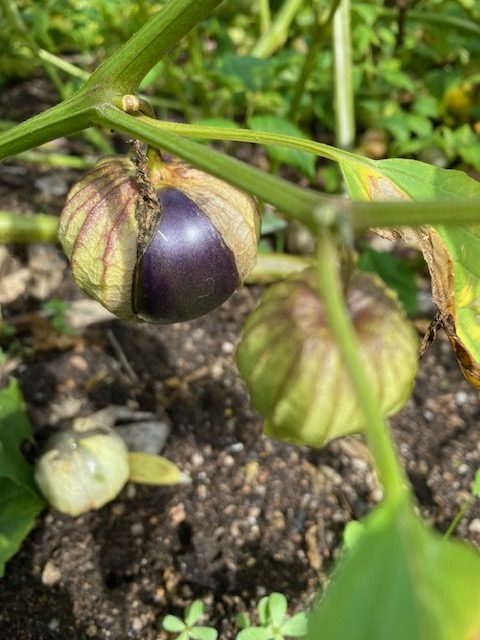
Fruits are harvested at eating stage. The husks will have turned brown and burst open showing the fruit. As fruit are produced over a long period they are collected individually as they ripen.
Processing
Seeds are most easily removed from the fruit by using the same wet processing technique as eggplants. A video showing the process for eggplants is here and the process is described below.
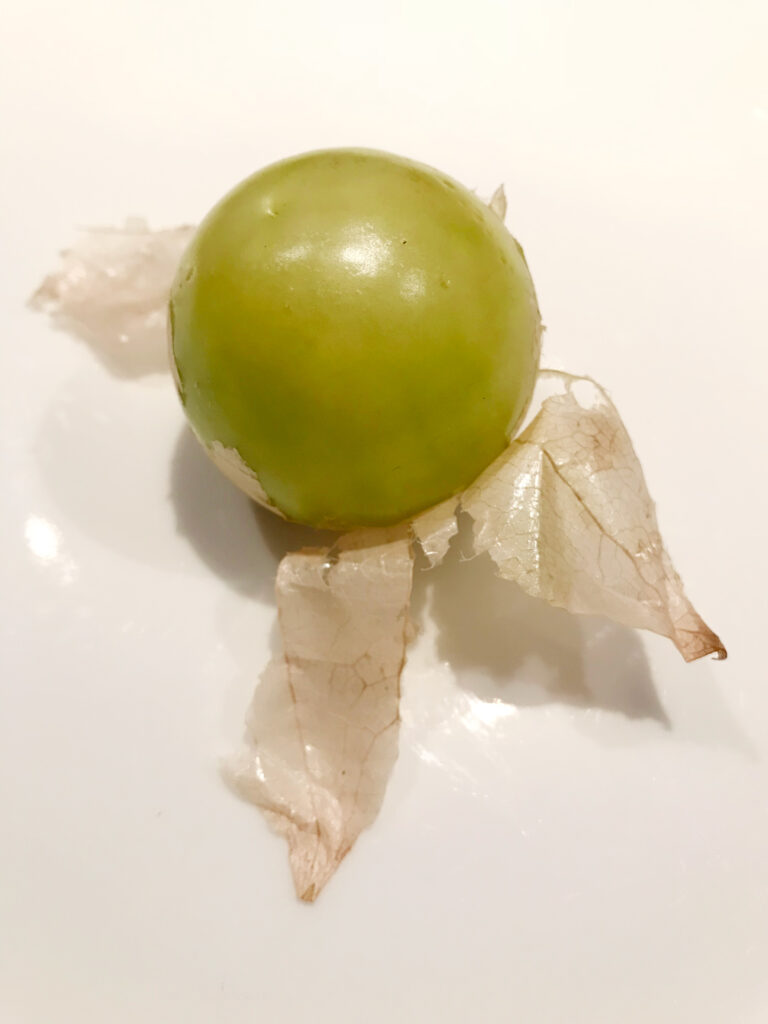
The fruits, without the husks, are placed in a food processor with copious amounts of water. A dough blade will avoid damage to the seeds but is not necessary if the processor is not overfilled with fruit. Short pulses are used to mash the fruit and release the seeds. The seeds will fall to the bottom of the bowl while the pulp will float. The pulp can be decanted off while carefully leaving the seeds at the bottom. It may be necessary to refill and decant several times to float off all the unwanted debris.
The seed should then be strained and spread out to dry.
Contributors
Liz Worth