Botanical name : Anethum graveolens
Common name : Dill
_box title=”Summary Information” radius=”10″]
Easy to Intermediate difficulty for seed saving
Lifecycle: Annual
Pollination: Insect pollinated
Mating system: Perfect self-fertile flowers, although pollen is produced before stigmas are receptive increasing the chances of out-crossing
Suggested spacing: Same as for eating production
Seed specific requirements: None
Isolation distance: 250 m
Population size: 20 plants
Seed maturity: Seed changes colour to light brown at maturity
Processing method: Dry threshing, sieving and winnowing
Expected seed viability: 5 years
[/su_box]
Growing for seed
Dill is cross-pollinated by insects. However home growers may chose to ignore isolation distances if they are not saving a specific named variety of dill.
Selection
Some dill varieties are intended for leaf production and some are intended for seed production. When saving seed from a leaf variety then the selection characteristics include prolific leaf growth and delayed bolting to seed. Varieties used for producing seed are selected to bolt to seed quickly and produce prolific amounts of seed.
Home growers may regard their dill as dual purpose and should select plants for a balance between seed and leaf production.
Harvest
Dill seed is ready to harvest when the seed heads change colour to brown and begin to dry off. They are prone to shattering in the garden and need to be harvested promptly as soon as they are mature. Individual heads are cut as soon as they are brown rather than green.
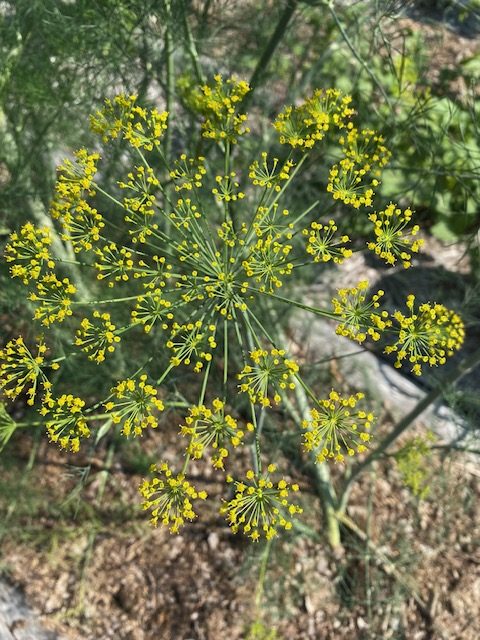
Dill produces a central primary flower umbel and then produces secondary umbels around it. The biggest and best seed will be in the primary umbel and get progressively smaller with the later set umbels.
As seeds are produced abundantly and a relatively large number of plants should be grown to flower together for genetic stability of the crop it is possible to harvest a significant amount of seed only from primary flowers. The crop can then be terminated and the area used for the next crop rather than waiting for all the seed to mature.
Processing
Dill seed can be dislodged from the flowerheads by either rubbing them between gloved hands or gently rubbing the seed head over the mesh of a sieve. Seed should be sieved and winnowed to remove unwanted frass.
Contributors
Liz Worth