Botanical name : Raphanus sativus
Common name : Radish, Daikon
Challenging for seed saving
Lifecycle: Annual or biennial
Pollination: Insect pollinated
Mating system: Perfect self-incompatible flowers
Suggested spacing: 30cm grid spacing
Seed specific requirements: Biennial varieties require vernalisation
Isolation distance: 250 m
Population size: 20 plants
Seed maturity: When all the pods have turned brown
Processing method: Dry threshing, sieving and winnowing
Expected seed viability: 6 years
Growing for seed
As radishes are self-incompatible, a group of them must be allowed to flower together at the same time.
Biennial varieties, such as daikon types, require some vernalisation to initiate flowering. In most Australian gardens these types can simply be left in the ground over winter to flower in spring. In very cold areas mulching heavily can help plants survive winter without damage.
Selection
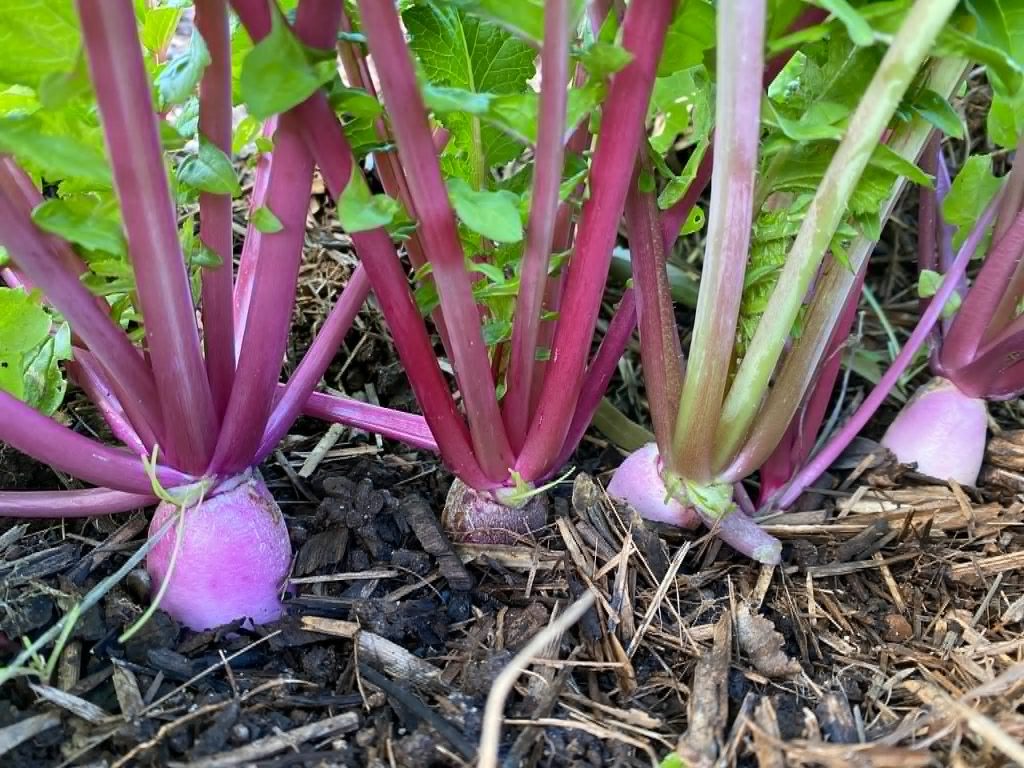
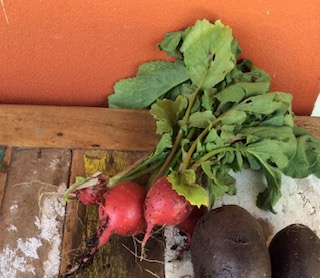
Like carrots and other root vegetables, radishes can be dug up for evaluation once they reach eating stage. Biennial types are best dug in mid winter. Roots that are selected to use for seed production can be replanted at 30cm spacings with their green leaves trimmed back.
Roots are selected on vigour, form and colour of both skin and flesh.
Internal flesh colour can be inspected by either taking a shallow slice from the side of round radishes or cutting the bottom part of longer types. If the crop has also been used in the kitchen without any variation being seen then this inspection may not be necessary.
Selection can also be based on how easily the pods are to thresh. Continual selection of seed from easier pods may help create a population that is less challenging to process.
Harvest
Radish seeds are mature when their enclosing pods turn brown and dry off. As these pods are not prone to shattering, seed growers can afford to wait for all pods to mature before harvesting by cutting the entire plant.
Processing
The downside of pods that do not easily shatter in the garden is that it can be challenging to get the seed out from them. They can be broken or crushed by hand. Alternatively they can be placed on a tarp and walked on to break open the pods. In some cases, growers place the seed material between two tarps and then drive over them. It is possible to use a rolling pin to break open the pods but care need to be taken to avoid crushing the seed itself.
Contributors
Liz Worth