Botanical name : Barbarea verna
Common name : Land cress, Upland cress, Landcress
Easy for seed saving
Lifecycle: Biennial
Pollination: Cross pollinated by insects
Mating system: perfect flowers, may be a strict outcrosser
Suggested spacing: Approx 30cm apart
Seed specific requirements: Vernalisation required.
Isolation distance: None as no named strains
Population size: 5 to 10 plants
Seed maturity: Stalks with seed pods are harvested after most of the pods have dried and turned brown
Processing method: Dry threshing, sieving and winnowing
Expected seed viability: 5 years
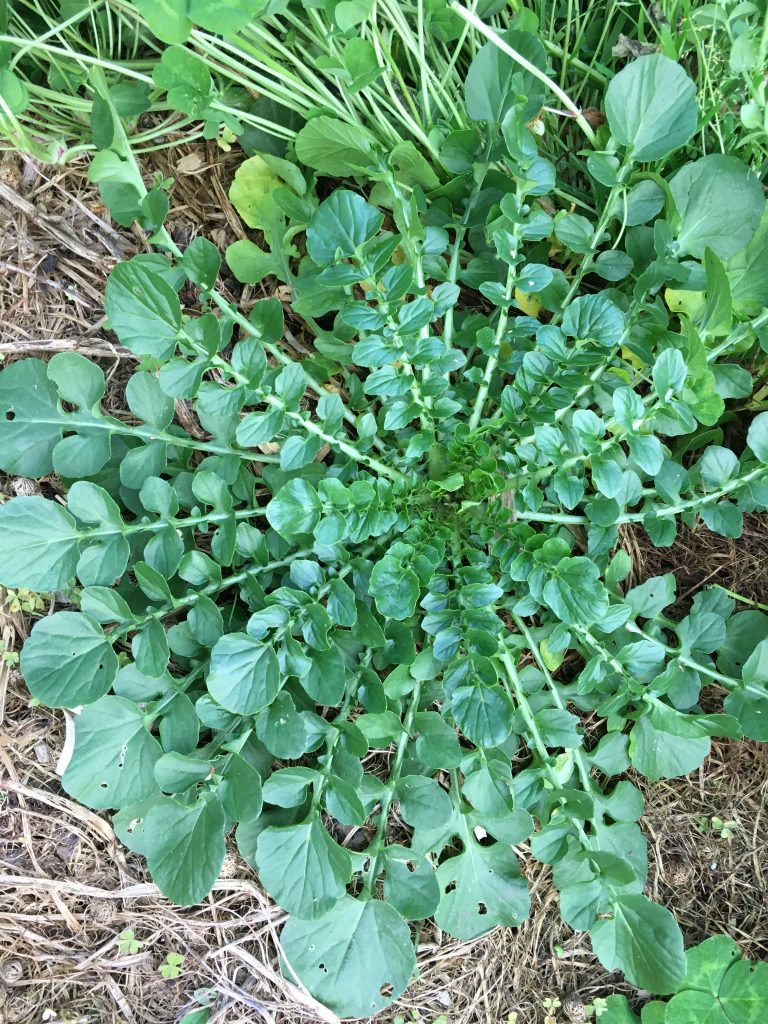
Growing for seed
Gardeners in Australia that are growing Land Cress do not need to worry about isolation distances as there are no named strains to keep separate.
It is best to grow plants specifically for seed saving and not harvest leaves for eating from those plants.
As Land cress requires some vernalisation to initiate flowering seed savers normally sow it in late summer or autumn to ensure plants are mature enough for vernalisation over winter. Flowering will occur in Spring with flowering stalks reaching about 60cm tall. The yellow flowers are followed by slender pods.
Selection
Selection is simply for healthy productive plants.
Harvest
Seed is mature when the pods change colour and become dry. They are prone to shattering in the garden if left too long and easily self-seed. Stalks should be cut before the bottom most pods start to shatter and when at least 60% of the pods are mature.
Processing
Seed can be separated from the plant material by rubbing the stalks and pods between gloved hands. Alternatively the plant material can be walked on to break open the pods.
Seeds are easily separated from chaff with sieves and winnowing.
Contributors
Liz Worth