Botanical name : Luffa aegyptiaca
Synonyms : Luffa cylindrica
Common name : Smooth Luffa, Sponge Gourd, Vegetable Sponge, Egyptian Cucumber, Loofa, Loofah, Luffa
_box title=”Summary Information” radius=”10″]
Easy to Intermediate difficulty for seed saving
Lifecycle: Annual
Pollination: Cross pollinated by insects
Mating system: Monoecious with separate pollen producing and fruiting flowers
Suggested spacing: Same as for eating or sponge production
Seed specific requirements: None
Isolation distance: 250 m or none if not growing a named variety
Population size: 5 plants
Seed maturity: Seed is mature when the skin of the fruit turns brown
Processing method: Dry process
Expected seed viability: 5 years
[/su_box]
Growing for seed
These vining plants should be grown up a trellis or supports of some kind. They are warm season annuals and do not handle cold or frosty weather.
If growing a specific named variety of smooth luffa the plants should be isolated by at least 250 m from other smooth luffa varieties. Angled Luffa is a different species and is unlikely to cross with smooth luffa varieties.
Selection
Good selection practice is to grow enough plants so that those that don’t perform well can be removed from the gene pool. Vigorous vines that produce well should be preferenced. This is true whether growing a named variety with specific traits or not.
Selection may be by skin colour of the fruit.
Harvest
Seed is mature when the skin of the fruit turns brown and dry. In dry weather they can be left on the vine until completely dry. During rainy weather it is better to pick fruits where the skin in dry in patches and finish the drying in a protected location than to leave them on the vine. This is to avoid the risk of mouldy seeds.
When harvesting for the production of vegetable sponges the fruits are picked while still green but just starting to soften. They are then submerged in water and soaked until the skin and flesh separates from the fibrous sponge. Depending on the temperature this make take a week or two. Seeds are not usually saved from fruits processed this way.
Processing
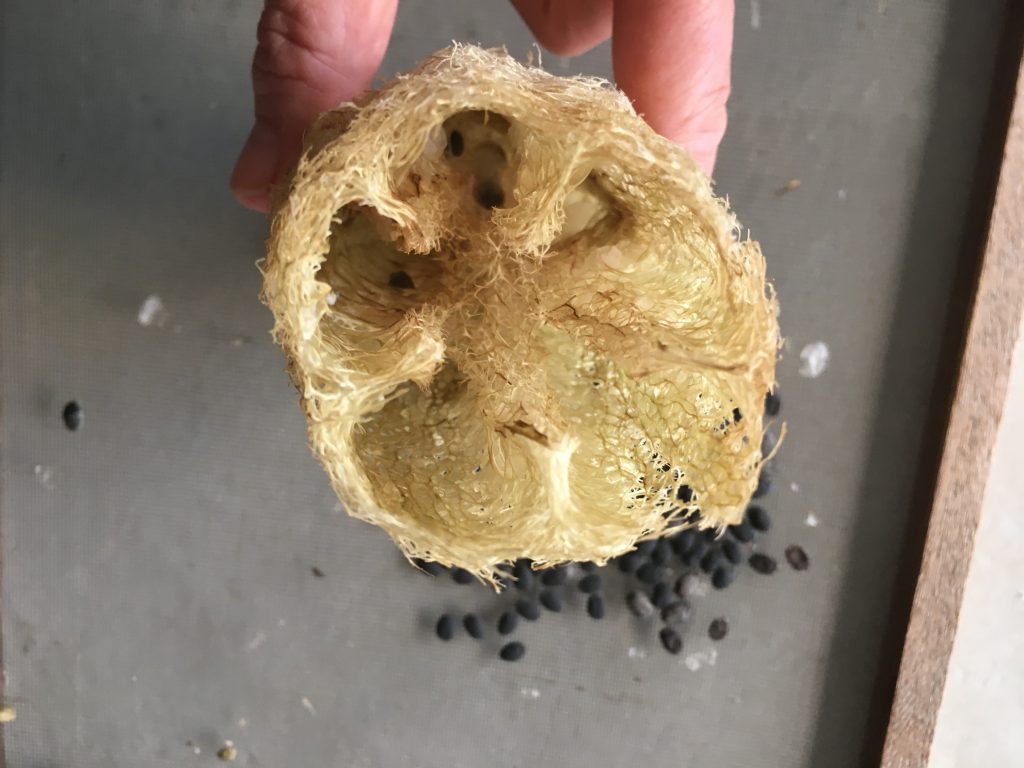
Separating seed from mature dried fruits is very easy. The tip of the fruit will crack away leaving the cavity down the centre of the sponge visible. Simply tap or shake the fruit to encourage the seeds to fall out the end.
Contributors
Lloyd Sharp, Liz Worth,