Botanical name : Lablab purpureus
Common name : Lablab Bean, Hyacinth Bean, Dolichos Bean
Intermediate difficulty for seed saving
Lifecycle: Short lived perennial or annual in cold climates
Pollination: Cross pollinated by insects
Mating system: Perfect self-fertile flowers
Suggested spacing: Same as for eating production
Seed specific requirements: None
Isolation distance: 30 to 150 m
Population size: 10 or more plants. Viable seed can be collected from a single plant.
Seed maturity: Seed is mature when the pods have turned brown
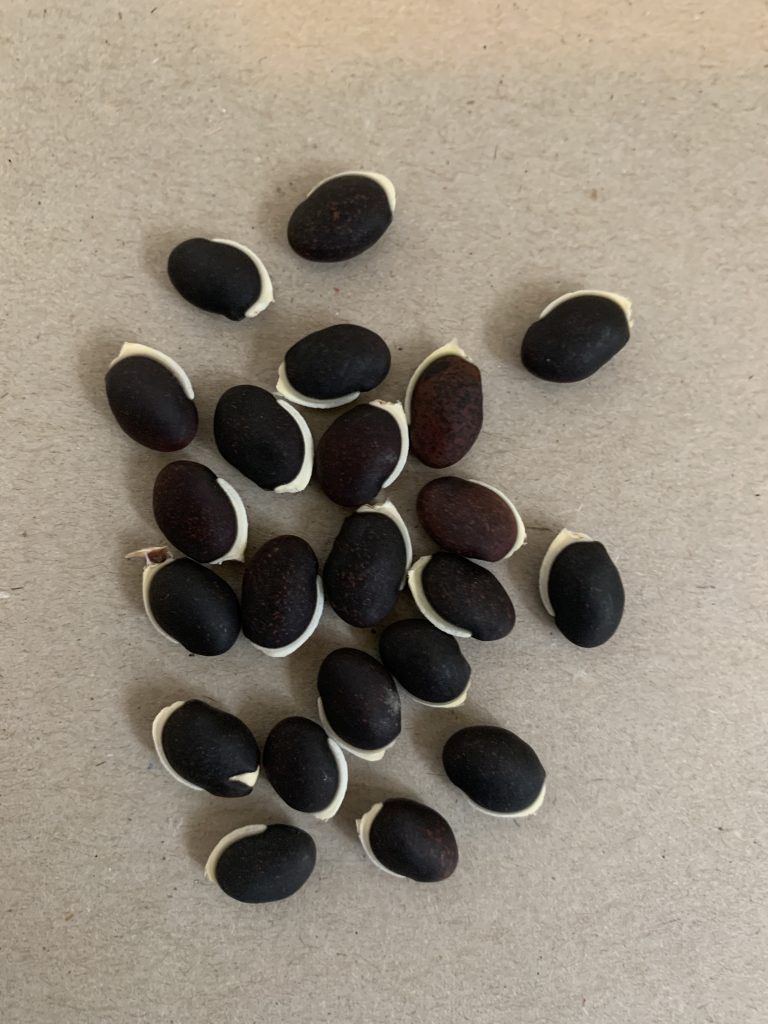
Processing method: Break seeds out of pods
Expected seed viability: 3 years
Growing for seed
As Lablab beans are cross-pollinated by insects they must be isolated from other varieties of lablab by at least 30 metres. More than 150 metres may be appropriate isolation for very rare varieties. Gardeners that are growing un-named types may choose to ignore isolation requirements.
Selection
Choose pods from robust plants that are producing good sized and well filled pods with appropriate flower and pod colour and size. Seed coat colour may also be selected for.
Harvest
Seed is mature when the pods change colour and begin to go light brown. If the weather is conducive the pods will dry on the plant and become crisp. Pods should be harvested as soon as they change colour in rainy weather.
Processing
Once the pods are dry they can be broken open to get the seeds out. This can be done by hand for each pod. Alternatively the usual methods of walking on the pods or using a threshing machine can be tried. If the seed is dry it is difficult to damage it by threshing. Do not be tempted to try threshing or walking on the plant material before it is dried as the seed could be damaged while it is still moist and soft.
Contributors
Liz Worth