
Botanical name : Sorghum bicolor
Synonyms: Sorghum vulgare
Common name : Sorghum, Sweet sorghum, Broomcorn, Milo, Saccaline
Intermediate difficulty for seed saving
Lifecycle: Annual
Pollination: Mainly self-pollination. Wind-pollination possible.
Mating system: Perfect flowers
Suggested spacing: Same as for eating production
Seed specific requirements: None
Isolation distance: 30 m
Population size: 10 to 20 plants
Seed maturity: Seeds may not change colour at maturity. They are mature when hard and can’t be pierced with a fingernail.
Processing method: Dry threshing and winnowing
Expected seed viability: 10 years
Growing for seed
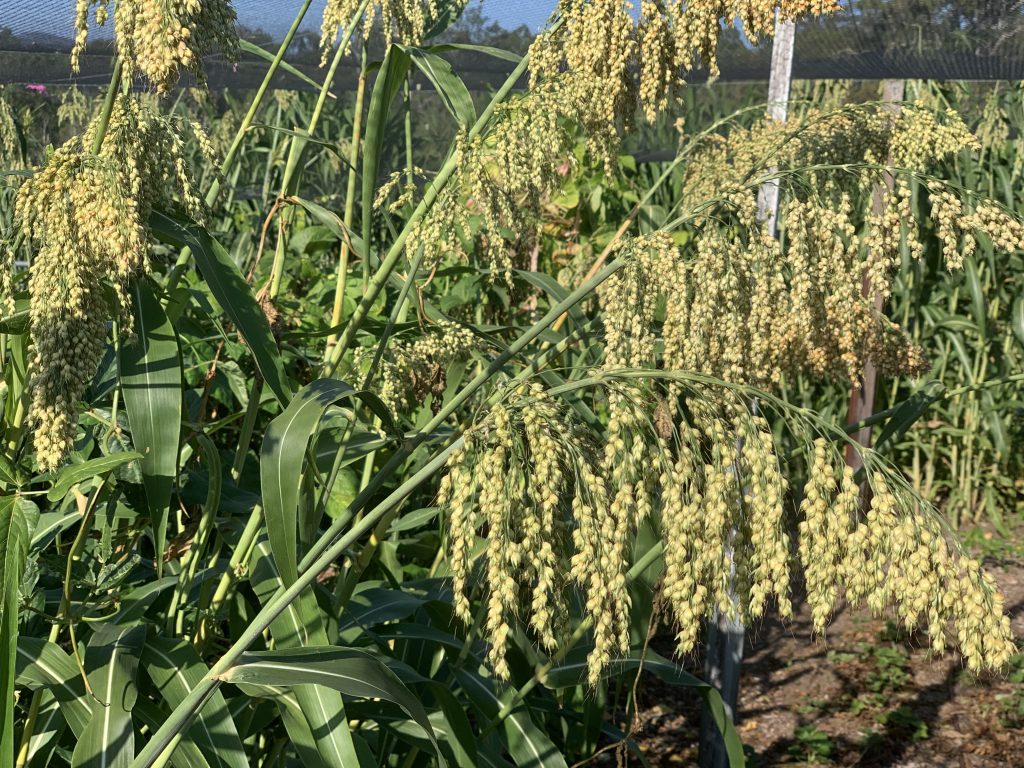
Sorghum for seed collection is grown in the same way as for eating. As there is some chance of wind pollination, varieties should be kept a minimum of 30 metres from other flowering sorghum varieties. For rare varieties this distance should be increased to 60 to 100 metres to ensure that the variety can be kept true-to-type.
Selection
Choose plants with good vigour for seed saving. As well as vigour, selection is based on seed colour and size.
Harvest
Seeds are mature when they become hard and can’t be squashed or dented with a fingernail. The seeds themselves do not change colour at maturity but the stalks will dry off and become brown.
Seed heads can be harvested individually or plants can be cut with a scythe.
The stems are then either hung to dry or spread on a tarp. They may require several weeks of drying before processing.
Processing
Seed can be threshed by rubbing each seed head between gloved hands.
Sieving and winnowing are then used to separate the seed from the chaff.
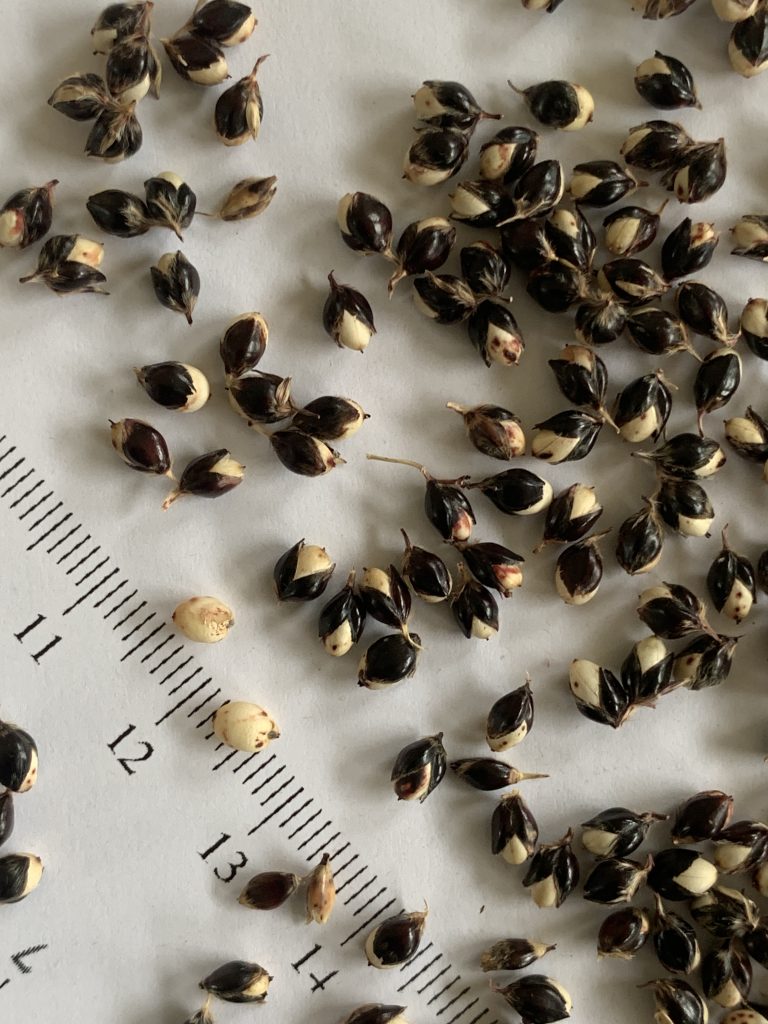
Seeds may still have their outer husk (glumes) attached. This is not an issue for seed saving as seeds will store and regrow easily in this form.
Contributors
Liz Worth